


Wipe down the kitchen as part of a nightly reset.
In Part 1, we followed germs along five paths through a home. Every path runs through two things: hands and the surfaces they touch most. This part gives you a short daily habit that interrupts both, without turning your house into a hospital.
Clean, sanitize or disinfect?
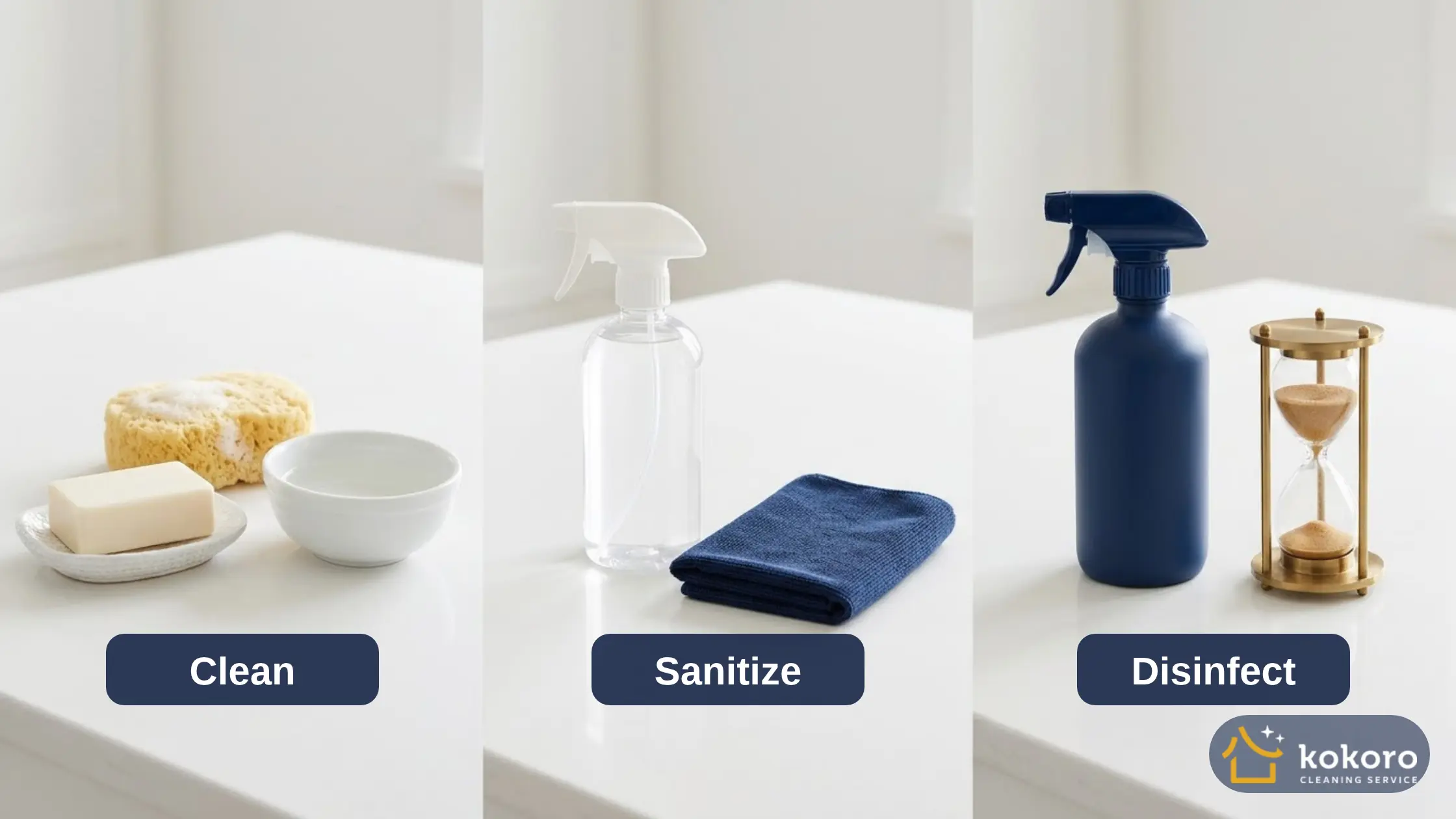
There's three levels of cleaning: Cleaning, Sanitizing, Disinfecting
These words mean different things (Centers for Disease Control and Prevention [CDC], 2025a):
Cleaning uses soap, water and scrubbing to remove germs and dirt. At home, it removes most germs in most situations.
Sanitizing reduces germs to levels considered safe.
Disinfecting uses chemicals to kill the germs that remain. The CDC says disinfecting at home is likely not needed unless someone is sick or at higher risk of getting sick.
If you do disinfect, two details decide whether it works. Clean the surface first, then apply the disinfectant and leave it. The surface must stay visibly wet for the full contact time printed on the label (U.S. Environmental Protection Agency [EPA], 2026). That time varies by product, from about one minute for some to ten for others (Alfa et al., 2015). Most people wipe it off in seconds, before it has done anything.
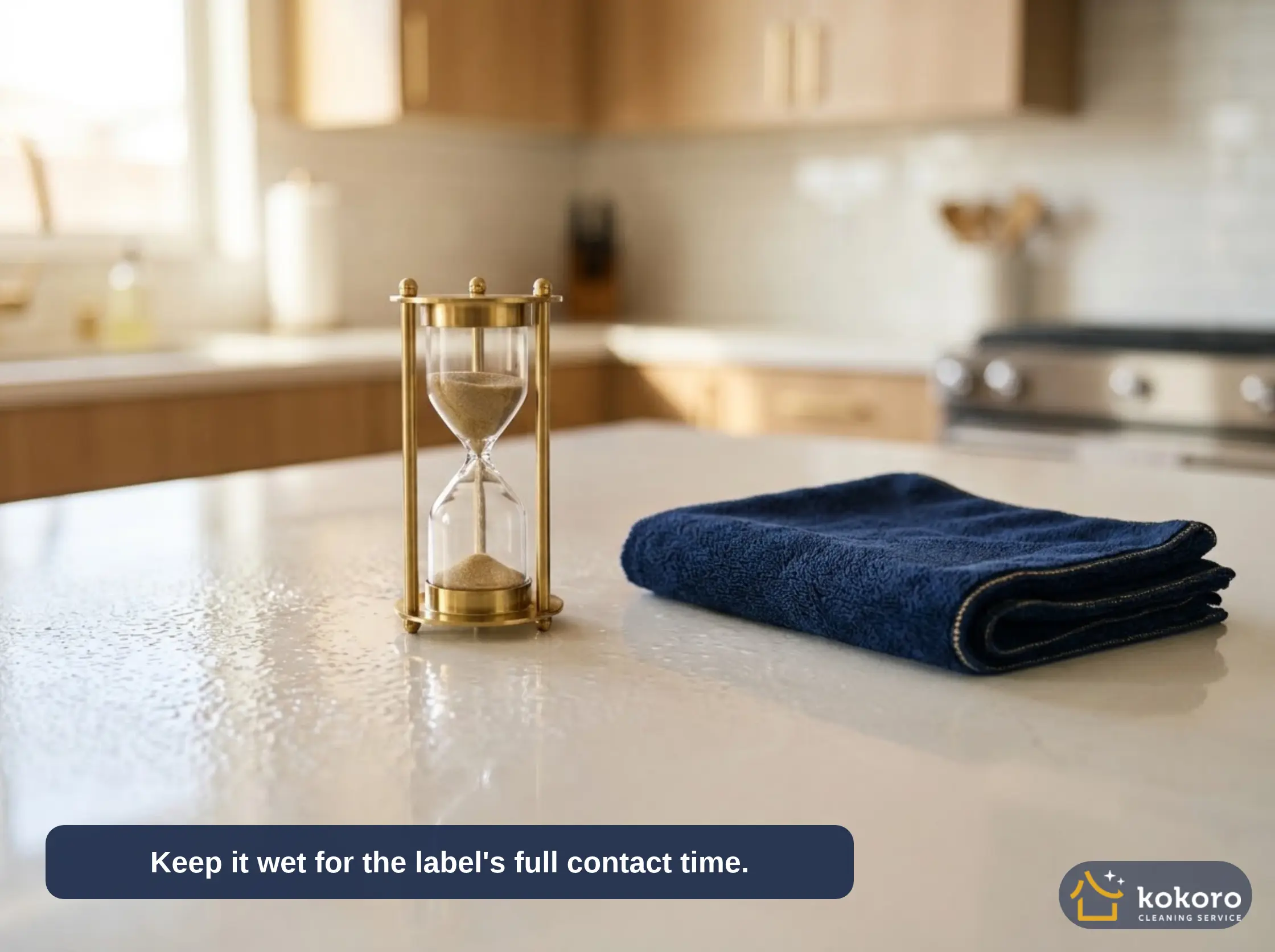
Ensure you follow contact time.
The 10-minute evening reset
This is the routine we recommend. Do it after dinner, before everyone heads to bed.
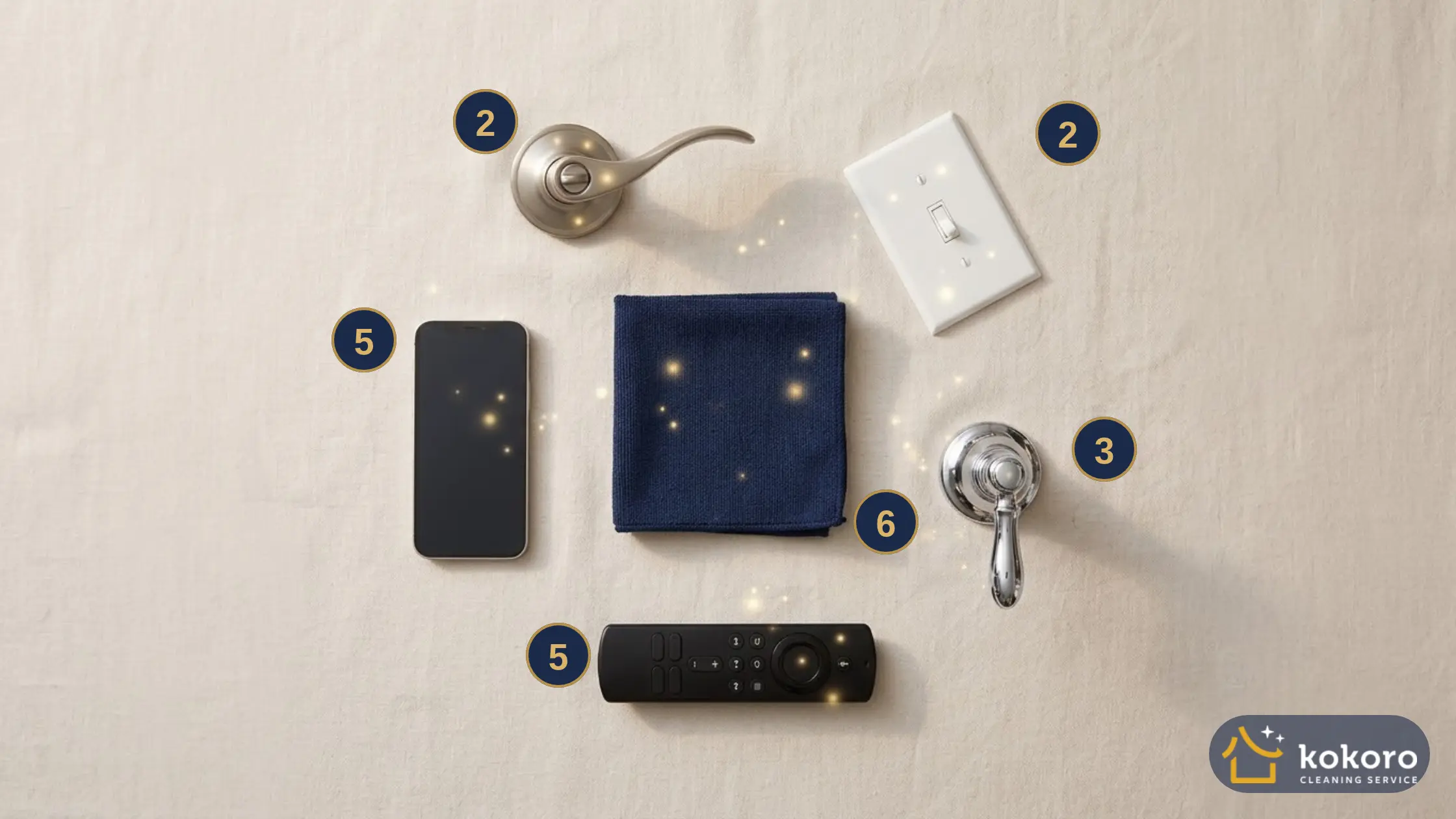
Include high-touch items in the evening reset.
1. Wash your hands with soap and water before you start (1 minute).
2. Wipe the entry door handles and main light switches (2 minutes).
3. Wipe the bathroom faucet, toilet flush handle and bathroom door handle (2 minutes).
4. Wipe the refrigerator, microwave and cabinet handles, then the kitchen counters and sink (3 minutes).
5. Wipe remotes, game controllers and the phone-charging spot (1 minute).
6. Swap or hang up hand towels so they dry overnight, then wash your hands again (1 minute).
On ordinary days, a cleaner or sanitizing wipe is enough. When someone in the house is sick, switch to a disinfectant for steps 2 to 5 and respect the contact time.
Why hands come first: in a randomised trial of more than 20,000 people in England, those given an online program to encourage handwashing reported fewer respiratory infections over 16 weeks (51% vs. 59%). The program also reduced spread to and from other household members (Little et al., 2015).
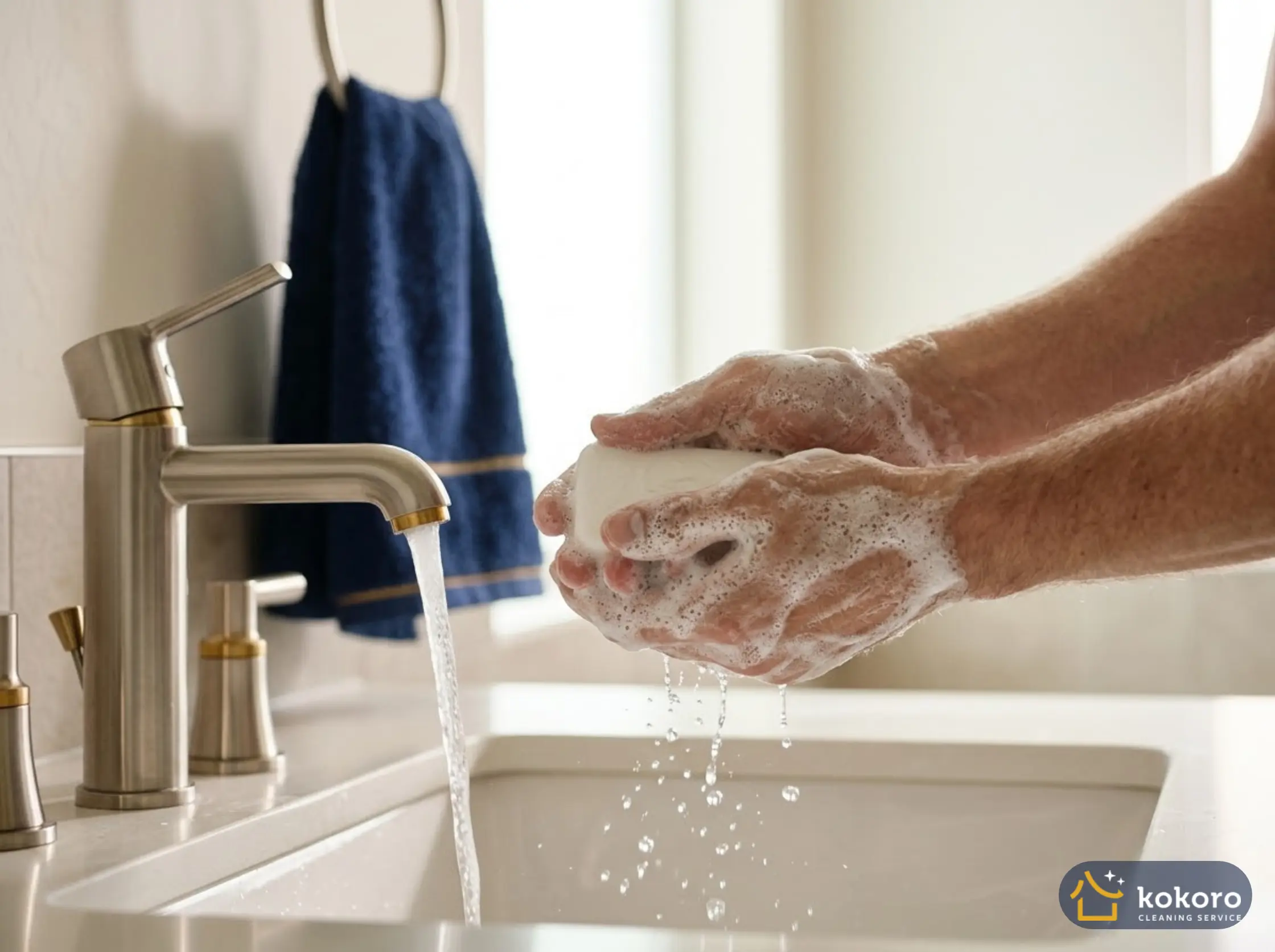
Lather hands with soap.
Winter adjustments for Las Vegas homes
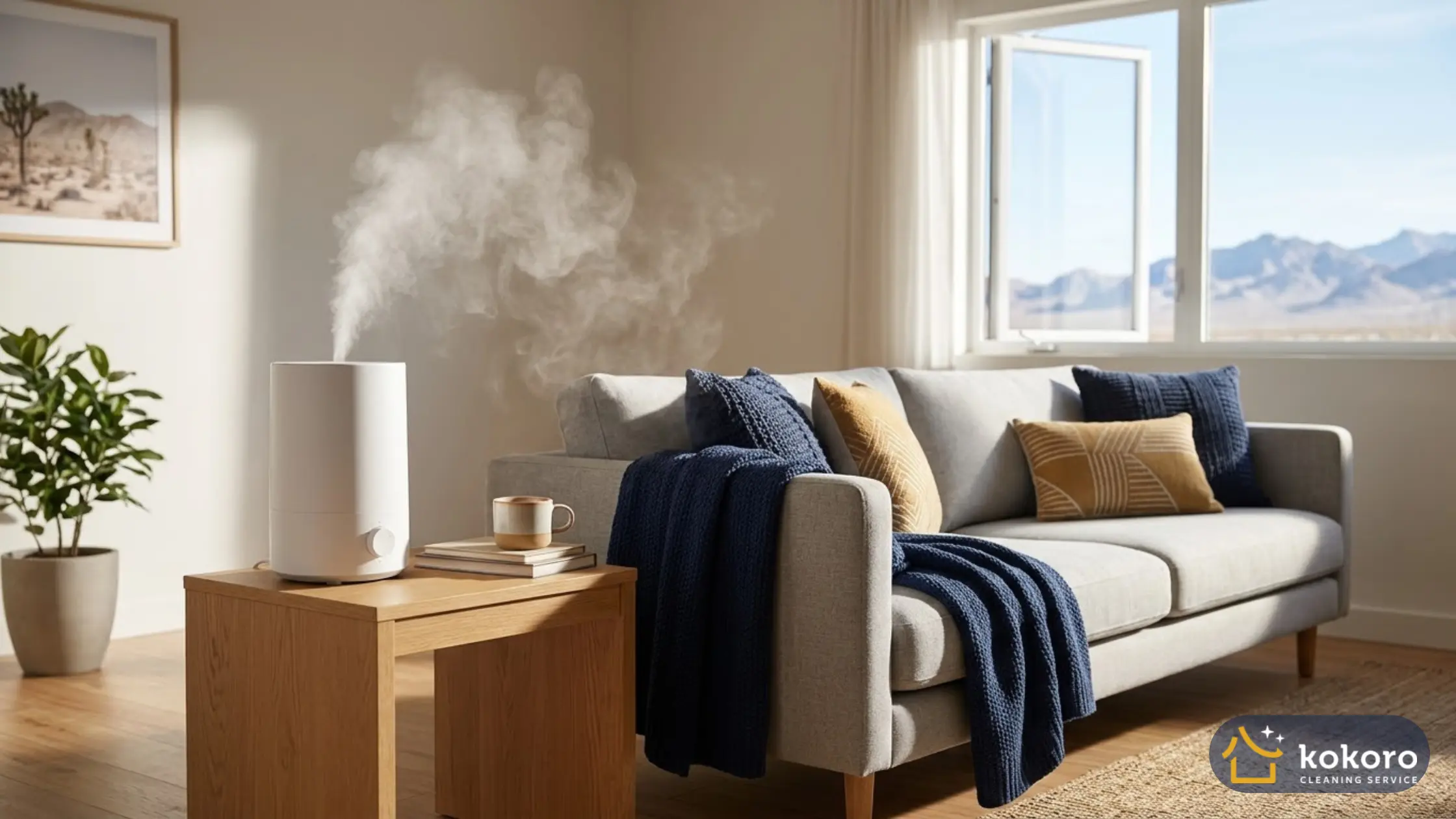
You need a humidifier and/or a slightly open window.
Watch your humidity. In a study of simulated coughs, flu virus stayed far more infectious in very dry air. Only 14% remained infectious after an hour at about 43% humidity, compared with 70–77% at 23% or lower (Noti et al., 2013). If a simple humidity meter shows your home below 40%, a humidifier is worth considering
.Let fresh air in. The CDC recommends steps for cleaner air, such as bringing in fresh outside air, especially when someone is sick (CDC, 2025b).
When someone gets sick
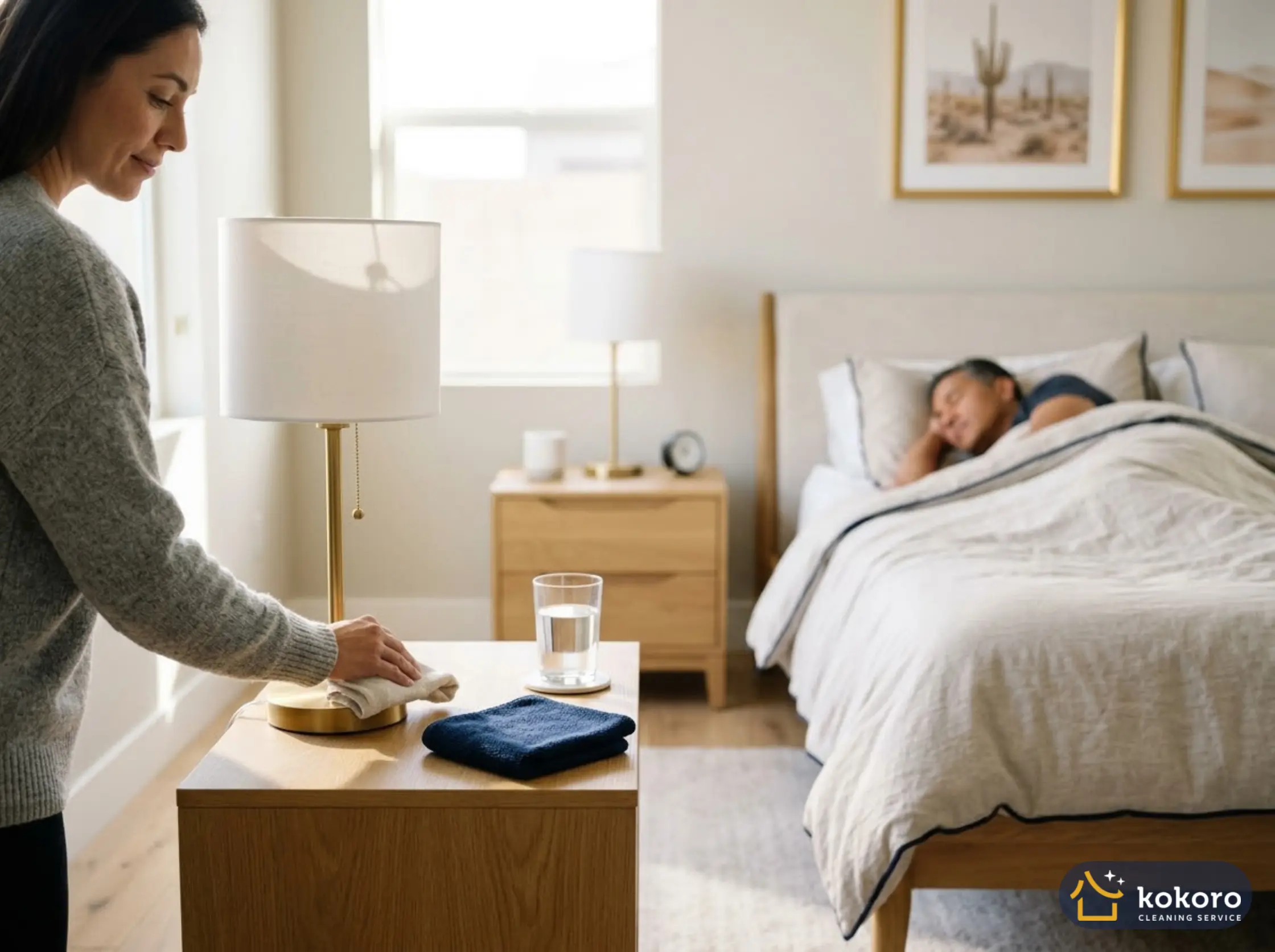
Wipe down nightstands beside the infected.
The CDC's current guidance covers flu, COVID-19 and RSV the same way (CDC, 2025b):
Stay home and away from others, including people you live with, until for at least 24 hours both are true: symptoms are getting better overall, and there has been no fever without fever-reducing medicine.
For the next five days, take extra care: cleaner air, good hand hygiene, distance, and a mask or a test when around others.
Seek medical care for warning signs such as trouble breathing or chest pain.At home, this is when disinfecting is worth it (CDC, 2025a). Focus on the high-touch surfaces around where the sick person rests, and give them their own towels.
Enjoy a holiday dinner together at home.
The honest reality
The goal isn't a sterile house. Everyday exposure to ordinary germs is part of normal life. The goal is to break the chain at the few points where it actually runs: hands, and the handful of surfaces everyone shares. Ten minutes a night does that.
Get the checklist on your fridge: Download the free 10-Minute Holiday Reset guide.
Rather hand the deep work to someone else before your guests arrive? Our team cleans high-touch surfaces in every room, every visit.
Book your holiday clean or call (702) 710-1201.
References
Alfa, M. J., Lo, E., Olson, N., MacRae, M., & Buelow-Smith, L. (2015). Use of a daily disinfectant cleaner instead of a daily cleaner reduced hospital-acquired infection rates. American Journal of Infection Control, 43(2), 141–146. https://doi.org/10.1016/j.ajic.2014.10.016
Centers for Disease Control and Prevention. (2025a, June 3). Cleaning and disinfecting. U.S. Department of Health and Human Services. https://www.cdc.gov/hygiene/cleaning-disinfecting/index.html
Centers for Disease Control and Prevention. (2025b, August 18). Preventing spread of respiratory viruses when you're sick. U.S. Department of Health and Human Services. https://www.cdc.gov/respiratory-viruses/prevention/precautions-when-sick.html
Little, P., Stuart, B., Hobbs, F. D. R., Moore, M., Barnett, J., Popoola, D., Middleton, K., Kelly, J., Mullee, M., Raftery, J., Yao, G., Carman, W., Fleming, D., Stokes-Lampard, H., Williamson, I., Joseph, J., Miller, S., & Yardley, L. (2015). An internet-delivered handwashing intervention to modify influenza-like illness and respiratory infection transmission (PRIMIT): A primary care randomised trial. The Lancet, 386(10004), 1631–1639. https://doi.org/10.1016/S0140-6736(15)60127-1
Noti, J. D., Blachere, F. M., McMillen, C. M., Lindsley, W. G., Kashon, M. L., Slaughter, D. R., & Beezhold, D. H. (2013). High humidity leads to loss of infectious influenza virus from simulated coughs. PLOS ONE, 8(2), e57485. https://doi.org/10.1371/journal.pone.0057485
U.S. Environmental Protection Agency. (2026, March 30). I have a question about a word or phrase on the List N website. https://www.epa.gov/coronavirus/i-have-question-about-word-or-phrase-list-n-website-im-not-sure-how-something-list-n
More stories
All articles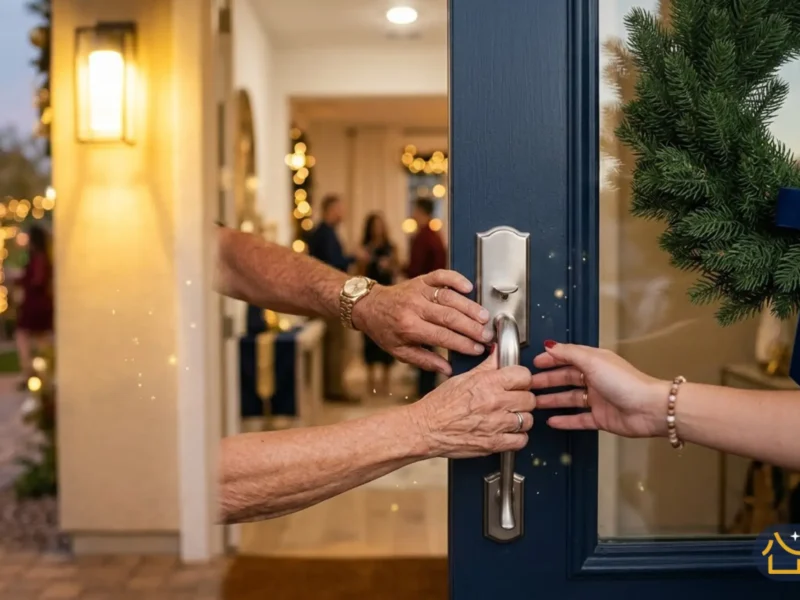
How Holiday Germs Make the Rounds
The holidays bring people together, and that means more hands on the same door handles, faucets and remotes. Germs travel the same way: from…
Read More : How Holiday Germs Make the Rounds
Allergen-Focused House Cleaning in Las Vegas
Puffy eyes in the morning. A scratchy throat every spring. Congestion in “dry desert air.” It isn’t your imagination.
Read More : Allergen-Focused House Cleaning in Las Vegas
Vacation Rental Floor Care by Surface
Every floor type has its own chemistry. Treat them all the same and you'll end up paying for it.
Read More : Vacation Rental Floor Care by Surface